I've previously talked about the difficulty of going 'up'. Of how much energy it takes for a trip that is not confined to the plane in which the planets of the solar system orbit the sun. Well, let's take this a step further. Let's start by assuming we've gone 'up' and that and we're now on course for one of our neighbouring stars, in other words, we're going 'out'.
Immediately, two questions spring to mind:
Firstly, how far do we have to go?
Secondly, how might we go about it?
Let's start with a reminder of just how big space really is. For this, we'll use a unit that I'm going to call the Lunar Lap. A Lunar Lap is the distance you cover when you go to the Moon and back — about half a million miles. It’s tidy, memorable and, with a bit of effort, just about imaginable.
We can use this unit to get a handle on astronomical distances. To start with, let's consider how far it is to the sun. The Earth sits about 93 million miles from it, that's a long way, but in Lunar Laps it something you can picture. One Earth–Sun distance is roughly 186 Lunar Laps. Imagine doing your Moon‑and‑back commute not once, not twice, but nearly two hundred times – and that's just the size of the inner part of our solar system.
Unfortunately, the outer bit is far larger. Let’s take our Lunar Lap ruler and head out towards the edge of the solar system, the boundary where the Sun’s influence peters out and where interstellar space begins. This region is called the heliopause, and it’s about 11 billion miles away. In Lunar Laps, that’s around 22,000. If a human-rated spacecraft takes about a week to get to the moon and back, which they currently do, then that's 400 years of travelling.
If that was a big jump in scale then it's nothing to what comes next. The entire span of the Sun’s bubble in space is tiny compared to travelling to the stars. Beyond the 22,000‑Lap hike to the edge of the solar system you have to start thinking in light years. A light year — the distance light travels in one year — is about six trillion miles. In Lunar Laps, that’s twelve million. Twelve million trips to the Moon and back. At current speeds, covering one would take far longer than we've had any kind of civilisation.
The problem now becomes that our nearest star is not even one light year away. Proxima Centauri, our closest stellar neighbour, is 4.2 light years away, which works out to around fifty million Lunar Laps. Fifty million. We better be sure it's worth the trip.
In conclusion, the scale is absurd. But that hasn’t stopped us from dreaming up ways to make the journey. So now, let’s take a tour through our best ideas for travelling to another star — some sensible, some speculative, all ambitious. And we’ll start with the easiest challenge: sending a robot. They don't get bored while travelling and, as I've already mentioned, they can tell us if it's a journey worth making.
The simplest way to reach another star is to accept that it will take a very, very long time. You build a probe, you give it a gentle push, and you let it coast for centuries. This is the “interstellar message in a bottle” approach. No fancy propulsion, no exotic physics, just patience. Lots of patience. If we launched a probe today using the same kind of propulsion as our deep space probes — chemical rockets plus a few gravity assists — it would take around 70,000 years to reach Proxima Centauri. Slow and steady works, but only if you’re comfortable with the timescale of geology.
If you want to go faster, and I think we need to, then you need more power. Enter nuclear propulsion. Back in the 1960s, scientists proposed Project Orion: a spacecraft powered by a series of controlled nuclear explosions. You drop a bomb behind the ship, it goes off, and the shockwave pushes you forward. Repeat a few thousand times and you’re on your way. It sounds crazy — and, admittedly, it is — but the physics checks out. An Orion‑style craft could, in theory, reach about ten percent of the speed of light. At that speed, Proxima Centauri becomes a forty‑year trip. Still long, but now within a human lifetime.
The problem, of course, is that launching a spacecraft by repeatedly detonating nuclear bombs is not advisable, even if you promise to do it very carefully. A better version is nuclear fusion propulsion: heating fuel until it fuses, and releasing enormous energy. Fusion rockets could reach similar speeds without the bomb detonation part. We haven’t cracked fusion power plants yet, but the idea remains one of the most realistic paths to fast interstellar travel.
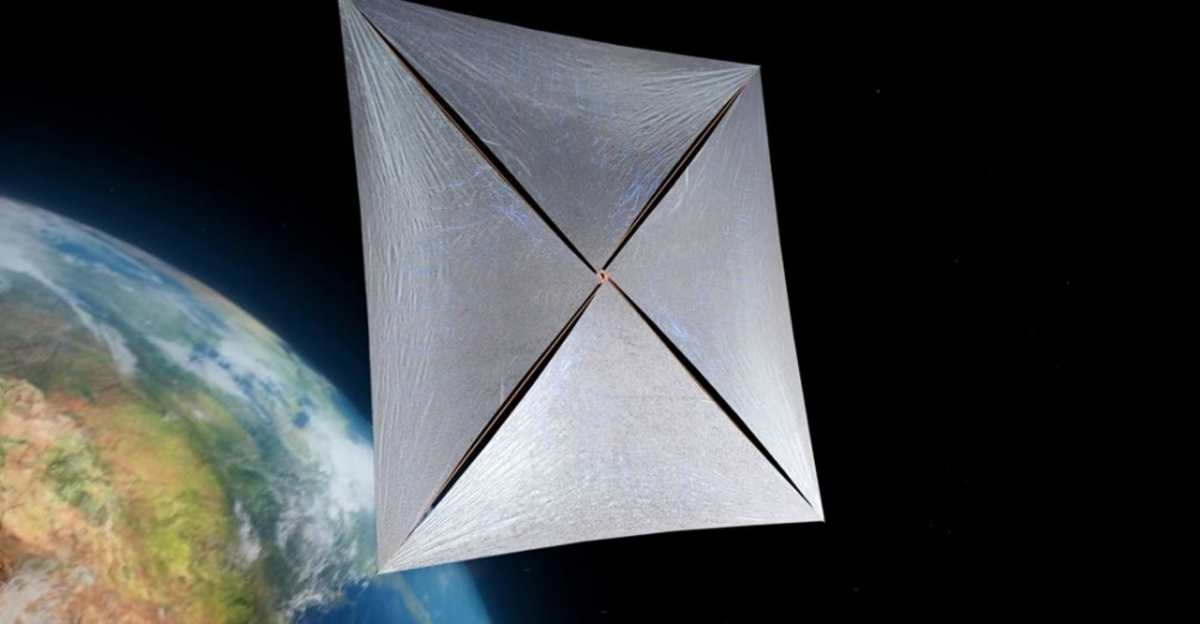
If you don’t want to carry fuel at all, you can let something else do the work. This is the idea behind Breakthrough Starshot, a real project aiming to send out tiny probes — gram‑scale spacecraft — by pushing them with a giant laser. The probe carries a reflective sail; the laser fires from Earth; the sail catches the light and accelerates. Because the probe is so small, the acceleration is enormous. Starshot hopes to reach twenty percent of the speed of light. At that speed, Proxima Centauri now becomes a twenty‑year journey.
The catch is you need a laser array the size of a small town, firing gigawatts of power with incredible precision. And your probe, once accelerated, has to survive being blasted by interstellar dust at a fifth of light speed. But as ideas go, it’s one of the most promising — and one of the few that, if we had the will, might actually be achievable this century.
There is a bigger challenge though; what if we want to send people? Humans are hard to transport. We need food, water, air - and entertainment. One solution is a generation ship: a vast, self‑sustaining spacecraft where entire communities live, grow, and die during the journey. You launch the ship knowing that the people who arrive will be the great‑great‑great‑grandchildren of the ones who boarded.
A generation ship would be more like a travelling city than a spacecraft. It would need farms, recycling systems, medical facilities, schools and ways to keep us distracted. The journey might take hundreds or thousands of years, depending on the propulsion. The biggest challenge isn’t engineering — it’s sociology. How do you maintain culture, purpose, and stability over dozens of generations?
If you don’t want to maintain a flying civilisation, you can try to put everyone to sleep. Cryogenic suspension — freezing people and waking them later — is a staple of science fiction. In reality, we’re nowhere close. Freezing human tissue without destroying it is extremely difficult. But if we ever solve it, a 'cryoship' becomes possible: you launch a crew, freeze them, and wake them decades or centuries later. No one has to spend their entire life on a giant starship.
And finally, the wildcard. In 1994, physicist Miguel Alcubierre proposed a theoretical model for a warp drive: a bubble of spacetime that contracts in front of a ship and expands behind it, allowing faster‑than‑light travel without breaking the laws of physics. It requires exotic matter and probably more energy than exists in the universe. But it’s fun to imagine. And every few years, a new paper appears suggesting tweaks that make it slightly less impossible, but nowhere near achievable either.
Realistically, our first interstellar travellers will be tiny probes riding beams of light. Humans will follow much later — perhaps in fusion‑powered ships, perhaps in generation vessels, perhaps in ways we haven’t yet imagined. The journey will be long. The engineering will be hard. The universe will not make it easy. But the fact we’re even discussing it says something about us. We're a species that looks at the night sky and thinks, “Yes, that’s far. Let’s go anyway.”
All great things start with a dream.