Can you digress before you even get started?
Let's find out.
Many words in English have alternative meanings, such as the word that forms the title of today's blog. However, the greatest of them all in this department is a word that runs to just three letters. And there's a major clue to what that word is in my previous sentence.
The word is 'run' and, in the 3rd Edition of the Oxford English Dictionary, the entry on this particular word extends to 75 columns of text! It starts with "to go with quick steps on alternate feet" - and then the trouble starts…
As an example: After running with a group in bad weather you could get ill and run a fever, then run a bath to treat it. Because your nose is running you get distracted and the bath runs over and drenches your cotton bath runner. You then realise you've run out of medicine and also forgotten some things during your last grocery run so you run you run an app to place an online order so someone can run them over to you.
You get the idea.
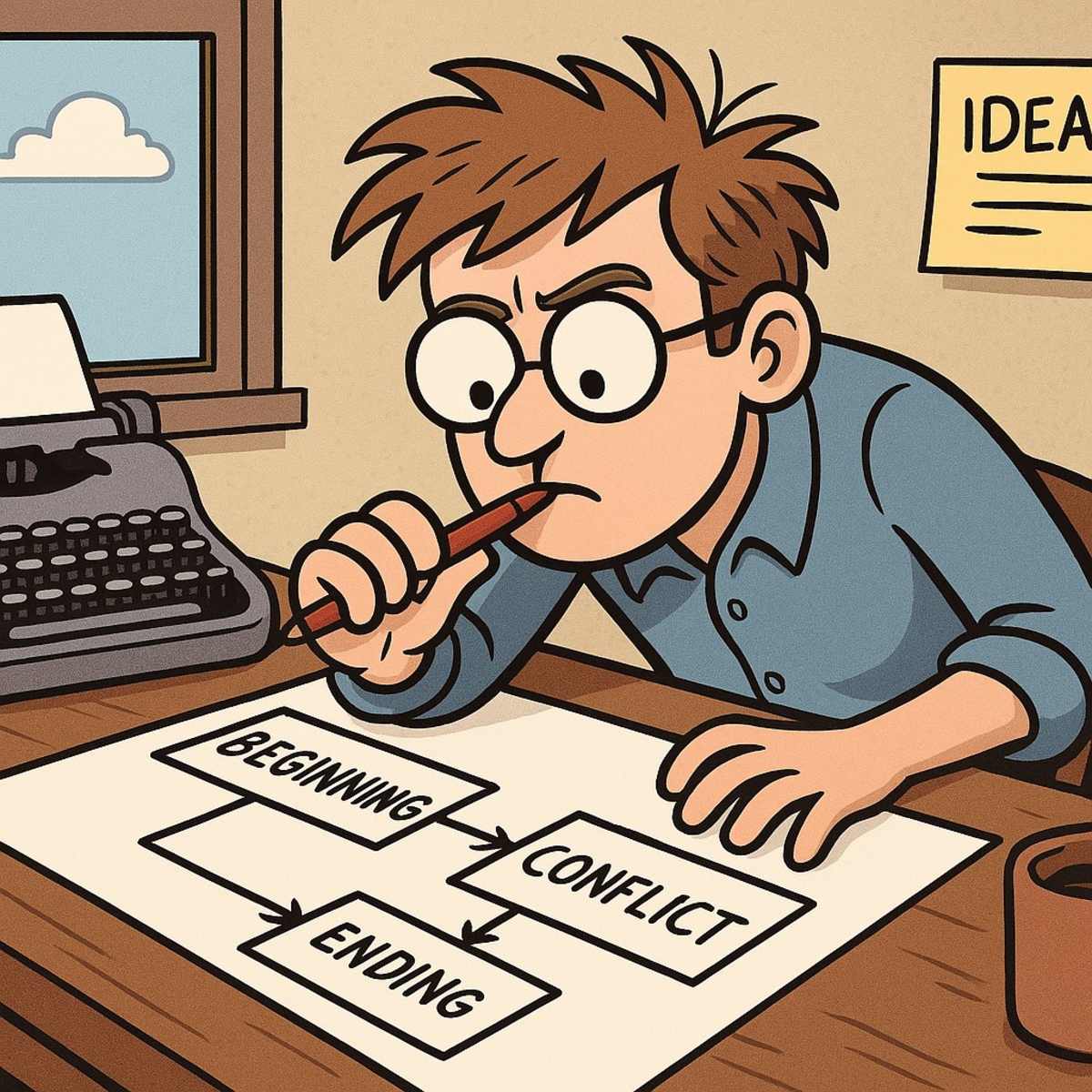
Today though, I'm concerned with plot and the art of plotting. Now, plot, has only three meanings and I suggest that only 2 (maybe 2 and a half) of them have any relevance to writing. The first meaning is to 'secretly make plans and carry them out (an illegal or harmful action)'. You might want to keep a plot for a new film or novel secret, but I'd hope it isn't illegal - or harmful. Of more use are the definitions 'mark (a route or position) on a chart' and 'devise the sequence of events in (a play, novel, film or similar work)'. Sequences of events are important to good story telling as is a route through to the ultimate goal of your story.
I'm not writing this blog pretending that I'm a master of plotting. It's more to share my own haphazard approach to it in the hope to make you feel better if you're struggling with it yourself.
There's one author I read who churns out at least one book a year. They tend to be written in the same, or very similar, universe but, if you like the sort of stories he offers, then he does it very well. In an interview he once said that he comes up with rigid plots and does not allow his characters to stray off their preordained path. The upside is that this is, without doubt, the fastest way to a finished story. The downside is that it does take some of the joy away, and stories can feel unnatural when characters are required to hit story beats at regular intervals. I suppose it's all down to the skill of the writer when devising their initial plot.
I prefer to grant my characters a little more freedom. It seems strange to refer to creations that come from your own head as independent entities, but the fact remains that they can surprise you. Because it takes time to write a scene, possibly over a number of days (or weeks sometimes for me), that gives plenty of time for the old sub-conscious to come up with alternate ideas - and it feels more natural to grant characters some latitude. The downside is that it does require a little improvisation in order for your story to end up where it's supposed to - or somewhere close. But, in my view, plans change and it's all part of the journey.
As with all things in life, it's a balancing act. You don't want a stilted story but, at the same time, you don't want a story that meanders around without purpose dropping plot points along the way. I think when all is written and done, you need to be happy with what you’ve created - that is by far the most important thing.
So how to go about plotting?
I tend to start by writing a broad outline for a story, kind of like a synopsis but without any of the hard details filled in. From that I can break down the ideas into scenes with the key things that need to happen in order to move the plot forward.
The next problem is the sequencing. A novel should have more than one story thread and these need to develop in parallel. I've tried the classic of writing scenes on post-it notes and shuffling them on a whiteboard. That works very well but you need a lot of space. Being a design and development engineer I also use Excel, a program that is way more flexible than the accountancy application it was originally designed for. I create columns with my story threads and shuffle cells accordingly.
As I write, I sometime choose to interleave scenes. This is again a result of the more liberal approach I take to plotting. Sometimes it's easy to jump back and forth and write both together. Other times I write them individually and then go back and intercut them. Occasionally, I have a master scene that forms the backbone of a chapter with subsidiary scenes fitted within it. It all depends on what I think makes the story most engaging.
In conclusion, I follow my mood and am open to diversions and digressions - such as occurred at the start of this blog. However, I'm all for a basic plan, if you write without one you can get lost. Ultimately, whatever you do, writing a novel can be a daunting process so the most important thing is that you find it fun - so I say write in a way that best makes than happen.