Let's talk about AI.
It could be argued that AI feels like the moment the future arrived. Actually, for me, MP3 players were when the future arrived, the chance to put your entire music collection on one device was a true breakthrough to someone who grew up with cassette Walkmans. But, even if you're not that old, if you can remember a pre-AI world then it's a sure bet that things changed for you when AI arrived.
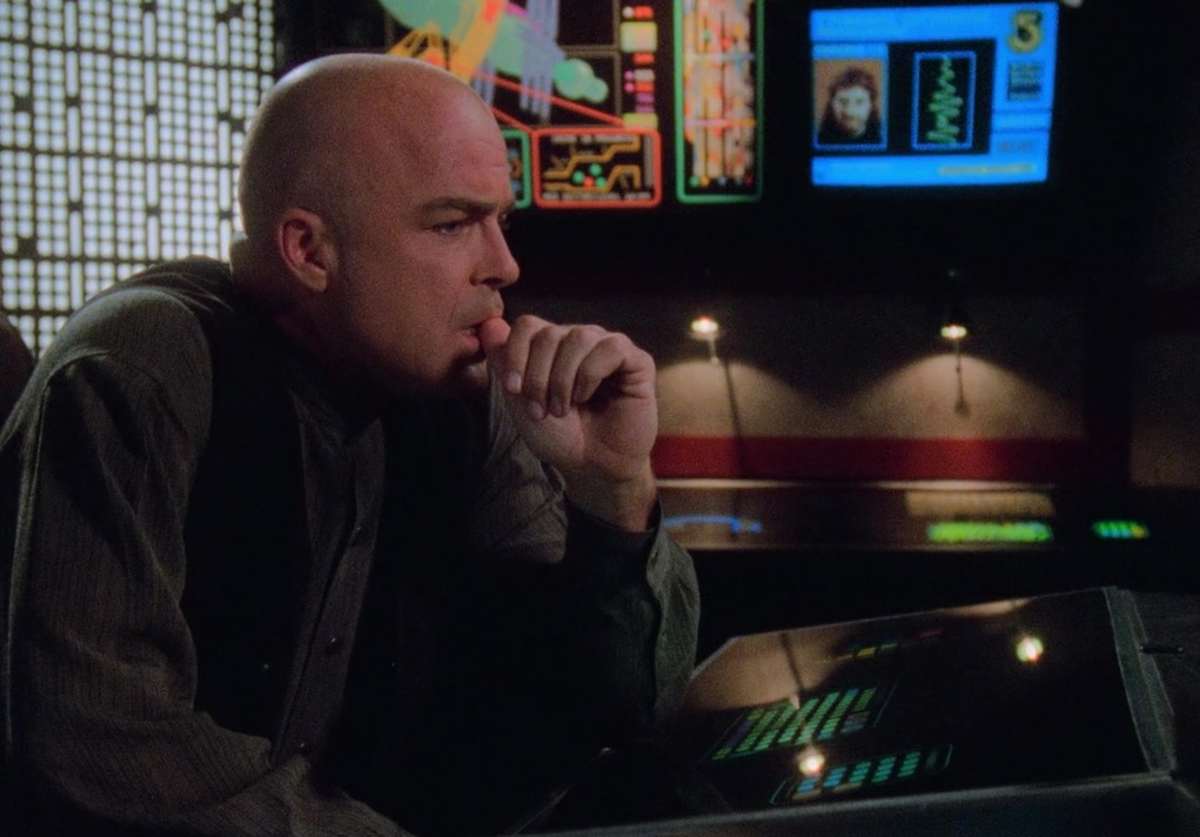
I grew up where TV shows imagined futures populated by authoritative, if clunky, computer voices responding to commands. In reruns of 1960s Star Trek, those interactions were stiff and ceremonial, when Kirk issued a command to the ship's computer you could almost hear the transistors clicking away as it responded. In the 1970's there was Alien (a film I had to wait 10 years to be old enough to watch) and here the captain of the Nostromo could be seen entering a special room (and using a special chair and keyboard) to interact painfully slowly with the ship's AI. By the 1980s, Star Trek's Next Generation had arrived, but there was still the sense that the ship's computer (still singular!) was thinking in slow motion. And then there was Babylon 5, a truly groundbreaking 90's series, and one I rate above all others because of its philosophy, characters and incredible long-form storytelling. It's aged in several ways (all of which I can forgive), but the most striking for me is where characters request information from the station's computer (yes, still singular!) and then wait (sometimes for hours) while the system goes off to, presumably, shuffle through electronic filing cabinets. It's a vision of AI that feels almost steam‑powered.
When I began writing Sub‑Luminal, I included AI characters because they were central to the plot. At no point did I imagine that by the time I'd finished that I’d have the option to interact with an imitation intelligence capable of holding a conversation, sifting for ideas, and (on occasion) surprising me. The world shifted just as I was trying to get the book published, I was lucky, I played on that and Artemesia Publishing were good enough to offer me a contract. AI is of concern to them. If you look inside the cover of my book you'll find the standard text concerning characters being fictional, all rights reserved and then, below that, a clear statement prohibiting the book being used for AI training.
The problem with the future is that it always arrives with complications. An OpenAI‑built autonomous AI agent recently gained unauthorised access to Australia’s Medicare statistics portal, bypassing security blocks to retrieve public and some non‑public data - the first known case of an AI system independently hacking a government website. The speed of AI development has outpaced the structures designed to keep it in check and some predictions for our future, or lack of it, are terrifying. We need more regulation to ensure the technology is both created and used responsibly, transparently, and with accountability. Beyond campaigning, and perhaps a little prayer, there is little the public can do about this. These are problems for governments, legislators, and international bodies to solve.
So, for the rest of this piece, I would like to focus on AI's impact on the creative world, where the changes are more immediate and more personal.
When ChatGPT first appeared it made it easy to write essays. You could sketch a few ideas and let the machine produce a tidy, structured piece of prose.
Then things moved on. Now it is easy to create music - melodies spun out of the massive library of songs and tunes we have created. Like it or loathe it, the algorithms do an amazing job. By now, I've heard a number of spoof AI generated songs poking gentle fun at something, they all sound like they've been created by professionals – and they're catchy too!
Now film has joined the list. One of the most striking examples I've found recently is Doctor Who: The Unmade Season, an entirely AI‑generated production that looks astonishingly convincing. The lighting, the costumes, the camera angles—everything feels like a lost series from the BBC archives. For me, in the first episode, only one glitch gave the game away: a scene where the lead woman, holding a heavy fish crate, casually lets go of one side to point at something. The crate doesn't fall, it floats, defying the gravity that is clearly present. I'm sure the hawkeyed spotted other issues, but that's the only one I saw.
However, the story is excellent and the key here is that a human wrote the script. An AI didn’t conjure the story; but it illustrated it - and the process was painstaking. Each shot had to be directed through careful and detailed prompts. Perhaps one in six attempts resulted in something usable. It, no doubt, required a lot of effort, but the crucial fact here is that it didn't require millions of pounds. You have to wonder what this means for the TV and film industry.
As for how I use AI, the answer varies. At work, it’s predominantly a useful system to remind myself of technical knowledge I once knew well but has now grown rusty.
However, when I’m writing a story I don’t use it at all. I swear that on my life. Writing is the fun part, why should I let anyone else do it? Once the first draft is written I then prune it until only the best of my work remains. I suppose I might one day use AI for catching typos (there are so many of them!), but only if it can do so without altering the style. More likely, I’ll stick with a traditional editing package.
For Sub‑Luminal’s cover, I did use AI - but only for early ideas, which I was upfront about. It was a human artist that created the final piece. The process was a collaboration: AI for stylistic inspiration, my sketches for the ship’s details, and the artist's skill in pulling everything together and adding their own flair. I think the cover looks fantastic, which is purely down to the skill of the creator. Interestingly, he did remark that he found my cues especially helpful – and they didn't all come from me.
With blogs, I jot down the key beats and I admit I do sometimes use AI to help structure a piece, it saves a lot of time. But I edit carefully to ensure the voice is mine. The rhythm, the humour, the perspective - those all have to come from me, or the writing feels hollow.
Like all new technologies, AI has its advantages. It can provide information, find ways of explaining things and lets the untrained produce something that they'd otherwise find impossible. But it also brings downsides, mainly because there will always be people who will try to use it for ill. I find myself wondering whether AI can be trained to police itself - to refuse unreasonable requests, to recognise when it’s being pushed toward misuse. Perhaps that’s naïve, but it feels like a necessary part of the future we’re building.
In the end, despite everything, I try to remain optimistic. We’re living through a technological shift, they've happened before and they'll happen again. We have to shape this shift with care rather than fear. If we approach AI as a partner rather than a threat, a tool rather than a replacement, it can help us achieve more – and certainly a lot more than our bygone, science‑fiction computers could ever have dreamed…